Blend PPC with schema and entity trust to maintain AI visibility and protect your Quality Score, as over 62% of Google searches now end without a click.
Zero-click search isn’t killing visibility, it’s redefining it.
- The New Reality: Shrinking Attention and Rising Costs
- From SEO to GEO: The Structural Shift
- How the Search Game Changed
- Why PPC Costs More When Clicks Disappear
- The GEO Advantage for Paid Search
- How to Adapt: 10 GEO + PPC Strategies That Still Drive ROI
- Mini-Example: Message Alignment
- Measurement in a Zero-Click World
- Future Outlook: Search Visibility Beyond 2026
As AI Overviews, featured snippets, and knowledge panels expand, both PPC managers and site owners are watching traffic metrics slide even when their rankings and ad positions remain strong.
In this new search reality, users don’t need to click to get answers. Google, Bing, and ChatGPT’s integrated engines summarize the web into one synthesized reply. The problem?
That “reply” often replaces the visit you used to earn.
This isn’t just an organic issue, it’s a paid problem, too. Ads appear below AI modules, CTRs drop, and quality scores slip, raising CPCs even when creative performance remains solid.
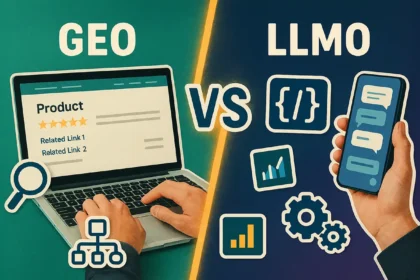
That’s where GEO (Generative Engine Optimization) comes in. GEO blends SEO’s logic with PPC’s precision and structured entity optimization to help your brand stay visible even when no one clicks.
Imagine a potential customer asking Google, “best payroll software for small business.”
Instead of ten blue links, they see an AI Overview summarizing three brands – none of which paid for the placement. That’s a citation, not a click.
And when the same logic starts affecting paid listings, your visibility depends less on budget and more on brand credibility in data form.
The New Reality: Shrinking Attention and Rising Costs
Ten years ago, the SERP felt predictable: blue links, ad blocks, and clear intent stages.
Now, AI overviews dominate the top fold, answering questions instantly before users even see your site or ad.
For users, it’s convenience. For advertisers, it’s compression, fewer clicks, higher CPCs, and distorted engagement data.
According to SparkToro’s 2024 study, over 62% of Google searches now end without a click. That single metric explains why traditional PPC and SEO performance metrics no longer tell the full
story.
From SEO to GEO: The Structural Shift
Search engines used to reward link equity and keyword precision. Today they reward contextual authority, how well your brand is defined, structured, and verifiable across the web.
That’s what GEO is built for. Instead of chasing keywords, GEO builds semantic credibility so engines can safely cite your brand within AI answers.
For PPC managers, GEO isn’t an alternative, it’s a multiplier. When your brand already exists as a trusted entity, your paid ads inherit that credibility, improving Quality Scores and conversion likelihood.
How the Search Game Changed
| Era | Search Behavior | Visibility Model | Optimization Focus |
|---|---|---|---|
| Classic SEO | Users click results | Organic rankings | Keywords + backlinks |
| PPC-Driven | Users click ads | Paid placement | Bid + CTR + Quality Score |
| GEO Era | Users read AI answers | Contextual citations | Entities + authority consistency |
PPC now lives inside a GEO ecosystem. Ads, schema, and content signals must tell one cohesive story so engines trust your brand enough to display or cite it.
Why PPC Costs More When Clicks Disappear
Zero-click behavior quietly erodes campaign efficiency through three main effects:
- Click pool compression: AI modules absorb queries, leaving fewer available clicks.
- CTR suppression: Even if your ad position remains stable, total click volume drops, lowering CTR averages and Quality Score.
- CPC inflation: A lower Quality Score increases CPC even without changes to relevance or bids.
In 2025, Google Ads’ own benchmarks show an average 8–12% rise in CPC across commercial queries since SGE’s rollout.
That means you now pay more for less traffic, unless you evolve how visibility is earned.
Traditional optimization (ad extensions, bid tweaks) can’t offset this pressure. Instead, refocus on value per click. In the AI-overview world, each click carries deeper transactional intent.
Those “super-clicks” are worth more, if you’re positioned to win them.
Here’s what the math behind the ad auction actually looks like:
Your Ad Rank is calculated by multiplying Maximum Bid × Quality Score.
When AI overviews lower click-through rates, the expected CTR component of that score falls, dragging Ad Rank with it, even when your creative and bid are identical.
To maintain visibility, Google Ads requires a higher bid to restore that rank.
In essence, you’re paying for the system’s algorithmic uncertainty.
By contrast, GEO signals (schema, reviews, and entity validation) create off-ad trust that helps maintain Quality Score consistency, meaning you can hold position with fewer bid increases over time.
The GEO Advantage for Paid Search
GEO doesn’t replace PPC, it fortifies it.
Generative engines analyze your structured data, connected profiles, and content relationships to decide what brands to mention. When your ecosystem is consistent, both organic and paid assets perform better.
How GEO reinforces PPC:
- Entity validation improves trust: When your organization schema matches ad copy, users feel continuity.
- Structured data increases eligibility: Product schema and FAQ JSON-LD feed directly into AI answers, granting free impressions that boost recognition.
- Authority signals stabilize CPC: Consistent entity context across site, ads, and citations enhances Quality Score resilience.
PPC alone can’t create that environment. GEO ensures your brand presence becomes a recognized data point in the search graph, not just an ad slot.
How to Adapt: 10 GEO + PPC Strategies That Still Drive ROI
The new goal: unify paid performance and structured visibility.
Here’s a 10-point GEO-PPC playbook built for 2025 and beyond.
- Map intent, not keywords. Group campaigns by intent stage (research, compare, buy) rather than phrase match.
- Use entity-centric ad copy. Include product, brand, and category entities in headlines.
- Sync schema and ads. Match product names, prices, and CTAs exactly between ads and schema.
- Feed PPC data into content. Repurpose top-converting search terms in high-authority pages.
- Adopt value-based bidding. Bid more on proven high-intent signals, not just volume.
- Publish structured answers. Add FAQs and How-To schema matching ad topics.
- Track entity mentions. Monitor how often your brand appears in AI overviews and panels.
- Maintain brand consistency loops. Align tone and metadata across ads, site, and socials.
- Test generative ad formats. Use conversational or auto-generated extensions for AI-style delivery.
- Merge analytics silos. Combine GEO, PPC, and schema dashboards to find overlap between authority and efficiency.
Mini-Example: Message Alignment
| Stage | Before | After (GEO-Aligned) |
|---|---|---|
| Ad Copy | “Shop comfort shoes online” | “Shop weak-arch running shoes by [Brand], verified best in AI Overviews” |
| Landing Page | Generic category | Product schema labeled “running shoe for weak arches” |
Measurement in a Zero-Click World
If clicks no longer define success, measure visibility equity instead.
Key new KPIs:
- Visibility share: Percent of SERPs/AI modules mentioning your brand.
- Citation frequency: Mentions inside AI answers.
- Entity strength: Number of verified data connections (schema, reviews, social).
- Engagement depth: Post-view conversions or branded searches after exposure.
- Conversion value per session: Fewer clicks, stronger intent, higher yield.
Traditional attribution is blind here. Instead, treat GEO and PPC as a shared visibility stack: paid traffic drives conversions, GEO builds presence that feeds every impression.
Let’s illustrate this with a real tracking example.
Suppose your brand runs campaigns for eco-friendly notebooks.
Instead of only measuring conversions, build a visibility dashboard that merges PPC, schema, and citation data:
-
AI Impression Share – how often your product is referenced in AI results for relevant terms.
-
Entity Consistency Score – checks if product name, brand, and offer match across schema, ads, and Knowledge Graph.
-
Post-AI Conversion Lift – measures sales that occur within 48 hours of exposure to AI answers mentioning your brand.
This multi-layer view reveals visibility equity that doesn’t show in click data.
GEO-oriented tracking bridges performance and perception, proving that unseen visibility can still drive revenue.
Future Outlook: Search Visibility Beyond 2026
Zero-click search is here to stay. Generative engines will handle more of the journey, awareness, evaluation, even recommendations.
That means success depends less on how loud your bid is, and more on how structured your truth is.
Expect these shifts:
- PPC stays vital for transactional exposure.
- GEO defines contextual trust for AI citation.
- Structured data and verified profiles become mandatory.
- Campaigns will merge organic + paid data layers into one semantic model.
Winning won’t mean outbidding, it’ll mean out-contexting.
Brands that combine entity clarity with performance precision will dominate AI-first visibility.
Expect generative engines to start integrating real-time transactional layers, think “buy now” or “compare instantly” buttons directly inside AI overviews.
When that happens, brands without structured, verified offers risk exclusion.
GEO and PPC will effectively merge: ad feeds, product schema, and pricing data will synchronize automatically across organic and paid inventory.
Site owners who already maintain accurate product markup and validated brand entities will be first in line for these next-gen placements, a mix of ad visibility and algorithmic trust.
Final Takeaway
Zero-click doesn’t mean zero opportunity. It means every appearance, even without a click, builds authority equity.
By merging GEO’s entity clarity with PPC’s transactional focus, you transform impressions into proof of expertise.
In 2025 and beyond, the winners of paid search won’t just buy visibility.
They’ll engineer credibility, and every rare click will be worth more than ever.
Further Reading
- The Age of Generative Search, Search Engine Journal, 2025
https://www.searchenginejournal.com/generative-search-age/ - Entity SEO and the Rise of GEO, Semrush Blog, 2025
https://www.semrush.com/blog/entity-seo-geo/ - Google AI Overviews: Impact on Organic and Paid Results, Search Engine Land, 2025
https://searchengineland.com/google-ai-overviews-impact-ppc-462780 - Beyond Keywords: Building Brand Entities, Moz, 2024
https://moz.com/blog/brand-entities-search - The Future of Paid Search in an AI-Driven World, Marketing Dive, 2025
https://www.marketingdive.com/news/paid-search-ai-future/ - Understanding Zero-Click Searches, SparkToro, 2024
https://sparktoro.com/blog/zero-click-searches/ - Google’s Search Generative Experience, Google Search Central, 2025
https://developers.google.com/search/docs/ai-overview - AI Search and the Evolution of PPC, WordStream, 2025
https://www.wordstream.com/blog/ai-search-ppc - How Generative Engines Rewrite SEO and PPC Rules, HubSpot Blog, 2025
https://blog.hubspot.com/marketing/generative-engines-seo-ppc - Search Behavior in the Generative Era, Nielsen Norman Group, 2025
https://www.nngroup.com/articles/search-behavior-ai-era/
GEO + PPC Synergy Cheat Sheet
| Aspect | Old SEO/PPC Tactic | GEO-Aligned Update |
|---|---|---|
| Gain visibility | Traditional methods often struggle to maintain visibility in today's search landscape. | GEO strategies enhance visibility by adapting to new search engine behaviors. |
| Drive traffic | Traffic generation relies heavily on clicks from organic search results. | GEO focuses on maintaining visibility even without user clicks. |
| Lower CPC | CPC rates can increase due to competition and changing algorithms. | GEO aims to optimize costs by improving ad relevance and targeting. |
| Improve conversions | Conversions can decline as users find answers without visiting sites. | GEO seeks to improve conversions by enhancing brand presence in search. |
| Scale Reach | Scaling reach is limited by traditional SEO and PPC tactics. | GEO allows for broader reach through innovative optimization techniques. |